


Q4 2026 Auto Buyer Trends: Purchase Intent, Used Car Interest Remain Strong Ahead of Holiday Shopping Season
By Ben Carsley, VP Content & SEO
The Q4 2026 automotive market is heading into the holiday season with buyers who are interested in purchasing, but increasingly deliberate about what makes a deal worthwhile. Economic pressure is shaping financing expectations, vehicle preferences and shopping timelines. Purchase intent, however, continues to edge higher.
Our latest Quarterly Consumer Intent Survey (QCIS) reveals a market of patient, flexible shoppers looking for clear value. Many are saving for year-end offers, considering used vehicles and weighing what ownership will cost after the sale. Dealers who match those priorities with the right inventory, compelling incentives and clear warranty options have an opportunity to close the year out strong.
Economic Friction Is Affecting Buyer Behavior, but Not Purchase Intent
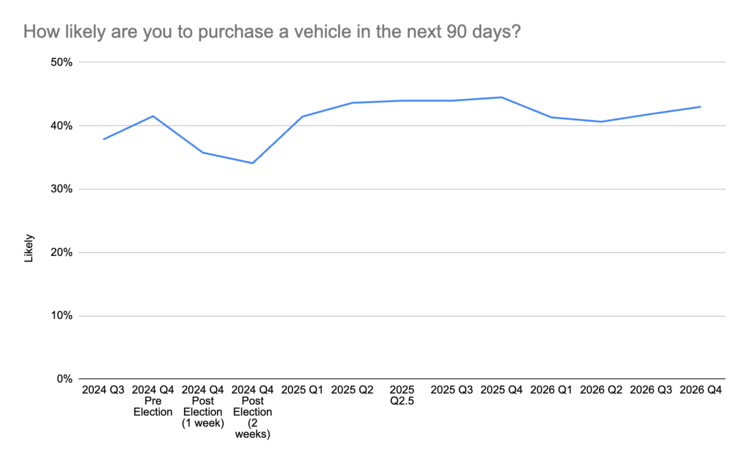
The good news for dealers: purchase intent has increased modestly from Q2 through Q4, reaching its highest level since Q4 2025. Economic friction is influencing how shoppers approach a purchase, but there is still meaningful interest in buying within the next 90 days.
The challenge is meeting those buyers on terms they can accept. Financing is a particularly firm boundary: 59% of shoppers say they require an APR below 6.9% or they would walk away. For that group, enthusiasm about a vehicle can only carry the conversation so far. The financing has to work, too.
Fortunately, holiday offers could give shoppers a reason to act. More than half of buyers, 54%, say they are more likely to purchase during the holiday period, and over a third expect discounts on outgoing model-year vehicles. These shoppers are entering Q4 with an expectation that the season will bring opportunities to get more for their money.
For dealers, that creates a clear assignment. Make available financing offers easy to understand, give outgoing model-year inventory meaningful visibility, and explain how the deal addresses the buyer’s budget. A seasonal promotion needs enough substance to move someone from waiting for an opportunity to recognizing one.
Demand is present. Whether it turns into a sale will depend on how closely the offer matches the shopper’s expectations.
Holiday Shoppers Are Willing to Wait for Right Deals
Nearly two-thirds of shoppers say holiday promotions can influence their purchasing decisions. That gives dealers a substantial audience to reach, but many of those buyers have been planning their timing well before the first holiday ad appears.
In fact, 57% of shoppers say they save throughout the year for year-end deals. For these consumers, waiting is part of the plan. They have set money aside and are looking for a reason to put it to use.
That does not mean every campaign should revolve around a single shopping weekend. While about 25% of shoppers specifically target Black Friday, 39% say they will buy whenever they see a good deal during Q4. Dealers have an opportunity to reach buyers throughout the quarter, provided the offers are compelling and the timing is clear. Saving every strong message for late November risks overlooking shoppers who are ready to act earlier.
There is also an education opportunity. Year-end tax benefits influence 60% of shoppers, while 21% say they are unfamiliar with those benefits. Dealers should explain relevant opportunities in accessible language and make eligibility clear, rather than assume buyers already understand what may apply to them.
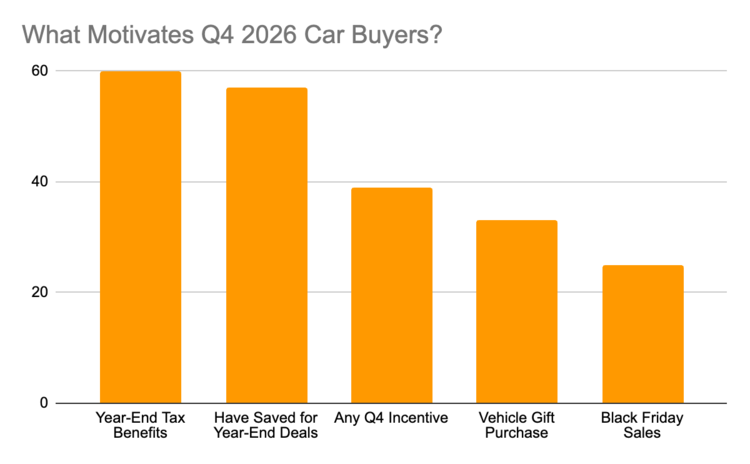
The holiday gift angle deserves some attention as well: 33% of shoppers would consider purchasing a vehicle as a gift. That gives dealers another way to frame seasonal messaging, especially when paired with specific inventory and a credible offer.
The common thread is preparation. Shoppers are saving, watching and comparing. Dealers should give them useful information before the holiday rush, then maintain a clear, consistent offer throughout the buying process. A buyer who is willing to wait can still be persuaded to act when the value is right.
Used Car, Extended Warranty Interest Is Accelerating
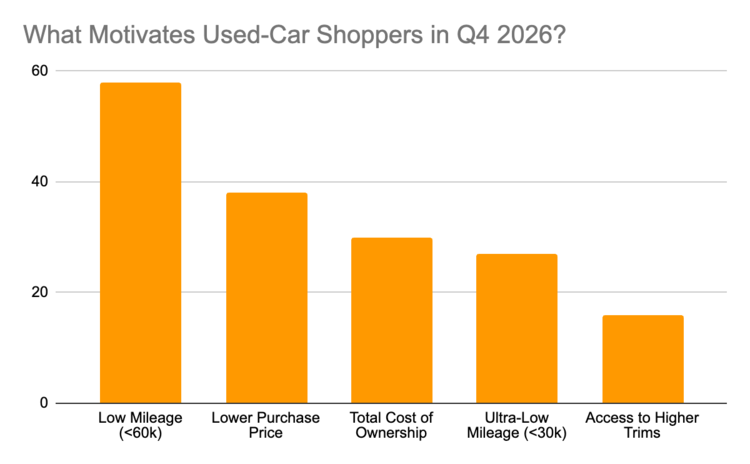
The focus on value extends beyond the purchase price. 30% of shoppers cite total cost of ownership as the most important financial consideration driving their decision. They are thinking about what it will take to own the vehicle, not just what it will take to buy it.
That mindset is helping drive used-car interest. For 38% of buyers, a lower purchase price is the reason they are considering a used vehicle. Another motivation is getting more vehicle for the money: 16% are looking at used options as a way to access higher trim levels.
Those are two distinct value stories dealers can tell. Some shoppers want to spend less. Others want features or equipment that would otherwise be out of reach. Used-car advertising should make both opportunities easy to see instead of treating every buyer as someone simply looking for the lowest price.
Mileage expectations help clarify which vehicles deserve attention. 58% of shoppers want a vehicle with fewer than 60,000 miles, while 27% want one with fewer than 30,000 miles. Dealers should make mileage prominent in listings and use those preferences to help guide which trades they pursue.
Vehicle history matters, too. Maintenance and accident history reports are vital to 63% of buyers. Make that information easy to find and review, rather than asking shoppers to chase it down before they can decide whether a vehicle belongs on their list.
Warranty interest adds another layer. Perceived increases in repair costs make 27% of buyers more likely to purchase an extended warranty. Extended warranties are also the No. 1 driver of a used-vehicle purchase for 26% of buyers. For that group, protection against future repair expenses is central to the decision.
The practical takeaway is to build the used-car story around price, condition and ownership confidence. Show shoppers what the vehicle costs, what its history tells them and what protection is available. Be clear about which coverage is included and which options cost extra.
A competitive price can earn attention. Helping a buyer understand what comes after the purchase can make that attention more valuable.
Younger, Savvy Car Shoppers Will Help Drive Q4 Sales
Buyers ages 25 to 44 represent an important near-term opportunity: 54% say they are likely to purchase a vehicle in the next 90 days. Dealers should account for that interest when planning their holiday messaging and deciding which offers to emphasize.
The broader survey findings also point to a willingness to work toward a deal. Across the shopper audience, 68% say they are willing to compromise. That gives dealers room to present alternatives and help buyers weigh their options, provided those conversations stay grounded in what the shopper actually values.
The 57% who save throughout the year for year-end deals add another important signal. A long shopping timeline can reflect deliberate preparation. Dealers should be careful about treating patience as a lack of seriousness.
Together, these findings support an approach built around clear choices. Make it easy to compare available vehicles, understand the offers and see where a different option might deliver better value. A shopper who is open to compromise needs help understanding the trade-off, not pressure to abandon their priorities.
For younger buyers with near-term intent, that clarity gives dealers a useful way to turn holiday interest into a productive conversation. More broadly, it respects the work shoppers have already put into planning their purchase.
How Dealers Can Win in Q4 2026
The findings point to buyers who remain interested in purchasing, but are willing to wait, compare and adjust their plans to get the right deal. Winning their business comes down to making the value clear across four areas.
Educate consumers on holiday incentives. Explain available financing offers, outgoing model-year discounts and relevant year-end benefits in language shoppers can understand. Make timing and eligibility clear, especially for tax-related benefits that may not apply to every buyer. Start the conversation before Black Friday and keep useful offers visible throughout Q4. Buyers are watching for opportunities across the quarter, not just on one weekend.
Get aggressive with used and CPO advertising. Put used and certified pre-owned (CPO) inventory front and center in paid media, organic search and on your website. Show both sides of the value proposition: a lower purchase price and the opportunity to access higher trim levels. Support those messages with mileage, vehicle history and clear information about available warranty coverage.
Prioritize low-mileage, late-model trades to match demand. Use the mileage preferences in this report to guide trade-in outreach and inventory decisions. Put particular attention on acquiring vehicles that fit what shoppers are seeking, then make their mileage and condition prominent once they are available. The holiday offer will be more compelling when it leads to inventory the buyer already wants.
Highlight limited complimentary warranties. When your dealership offers a limited complimentary warranty, make it visible in vehicle listings, advertising and sales conversations. Explain what is covered, for how long and what limitations apply. Distinguish that included protection from any optional extended coverage that costs extra. With repair expenses on shoppers’ minds, buyers should be able to understand the protection that comes with the purchase.
The Bottom Line
The Q4 2026 buyer has reasons to be careful and reasons to act. Purchase intent remains strong, holiday offers can influence timing and used vehicles give shoppers multiple ways to pursue value.
Dealers who connect those priorities have a clear opportunity. Lead with credible incentives, stock vehicles that match demand and make ownership costs and warranty options easier to understand. These shoppers are prepared to wait for a deal that meets their expectations. Give them a clear reason to recognize that deal at your dealership.
About the QCIS
The Quarterly Consumer Intent Survey (QCIS) is a proprietary research program developed and published by C-4 Analytics, now in its sixth year. Each quarter, the QCIS surveys more than a thousand in-market car shoppers nationwide on purchase intent, vehicle and brand preference, dealership selection, and the macro forces shaping buyer behavior, using consistent questions over time to track real movement. The Q4 2026 edition draws on a core consumer intent survey of 1,001 respondents, trended against 1,014 respondents in Q2 2026, and is supplemented by two focused Q3 2026 studies on affordability and trade-in of roughly 500 respondents each. Findings are published as actionable guidance for dealerships and automotive marketing professionals.
About C-4 Analytics
C-4 Analytics is a full-service automotive digital marketing agency that helps dealerships and dealer groups grow through data-driven SEO, paid search, social advertising, and content strategy. With offices in Boston, Ann Arbor, and Chicago, C-4 works with dealerships across the country to turn digital presence into measurable business results.
Want to see how holiday car-shoppers are searching in your market? Claim your free digital deep dive and we will help you finish 2026 out strong.